Food hygiene and professional sanitation experts in Brampton support your business in maintaining restaurants, food supply centers, bakeries, warehouses, and mobile food operations to code. They sanitize frequently touched areas, food-contact surfaces, equipment, floors, drains, restrooms, and prep areas with approved chemicals, correct concentration, and documented exposure durations.
Important Highlights
- Sanitation professionals in Brampton support restaurants, grocery departments, commissaries, warehouses, bakeries, schools, mobile vendors, and allergen-sensitive operations.
- Frequently contacted areas, food-contact equipment, kitchens, floors, drains, restrooms, and storage areas are disinfected using area-specific procedures to eliminate cross-contamination.
- Approved sanitizer dilution, compatibility, and exposure duration are confirmed by trained contractors, with finishing documented via checks, inspections, and correction logs.
- Routine, regular, and cyclical activities designated by location make up hygiene timelines founded on danger, throughput, format changes, spills, and standards.
- Liability, colour-coded equipment, hazard analysis knowledge, health regulatory understanding, WHMIS training, testimonials, and audit-ready sanitation records are essential supplier traits.
Brampton Venues That Need Food Safety Cleaning: Which Ones?
Food safety cleaning is required for any Brampton facility that deals with, keeps, prepares, packages, or provides food. Apply it to your facility if it comes under health inspections, food codes, or HACCP requirements. This includes dining establishments, break rooms, distribution centers, market departments, meat shops, fish areas, stores, and food prep kitchens.
Proper hygiene protocols remains required in storage facilities, production centers, refrigerated warehouses, bakeries, school nutrition services, event spaces, and delivery hubs. Temporary mobile establishments apply similarly, including food trucks, event sellers, and temporary stalls. Your venue needs established hygiene documentation if your team handle raw materials, divide prepared dishes, warm meals, or keep allergens stored. In Brampton, hygiene is not optional; it forms part of statutory, functional, and public health adherence.
What Do Brampton Cleaning Professionals Handle?
You need skilled cleaning experts who sanitize frequently touched areas, cooking areas, floor areas, and restroom facilities to maintain food safety and public health requirements. These areas are targeted due to their high cross-contamination potential, slip and fall dangers, and health code violations.
When you know their cleaning scope, you can verify that your facility's cleaning scope meets compliance and operational standards.
Focusing on High-Touch Surface Sanitizing
Skilled Brampton cleaners recognize that high-touch surfaces require disinfection since these areas contain pathogens and debris. You require a scheduling system for sanitizing frequently touched items like handles, plates, switches, railings, equipment controls, payment terminals, and fridge pulls. Implementing surface identification mapping, teams pinpoint every regularly used surface and set cleaning frequency
by swapping cleaning materials, maintaining sequential systems, and dividing sanitization equipment separate according to location
Kitchens, Floors, and Restrooms
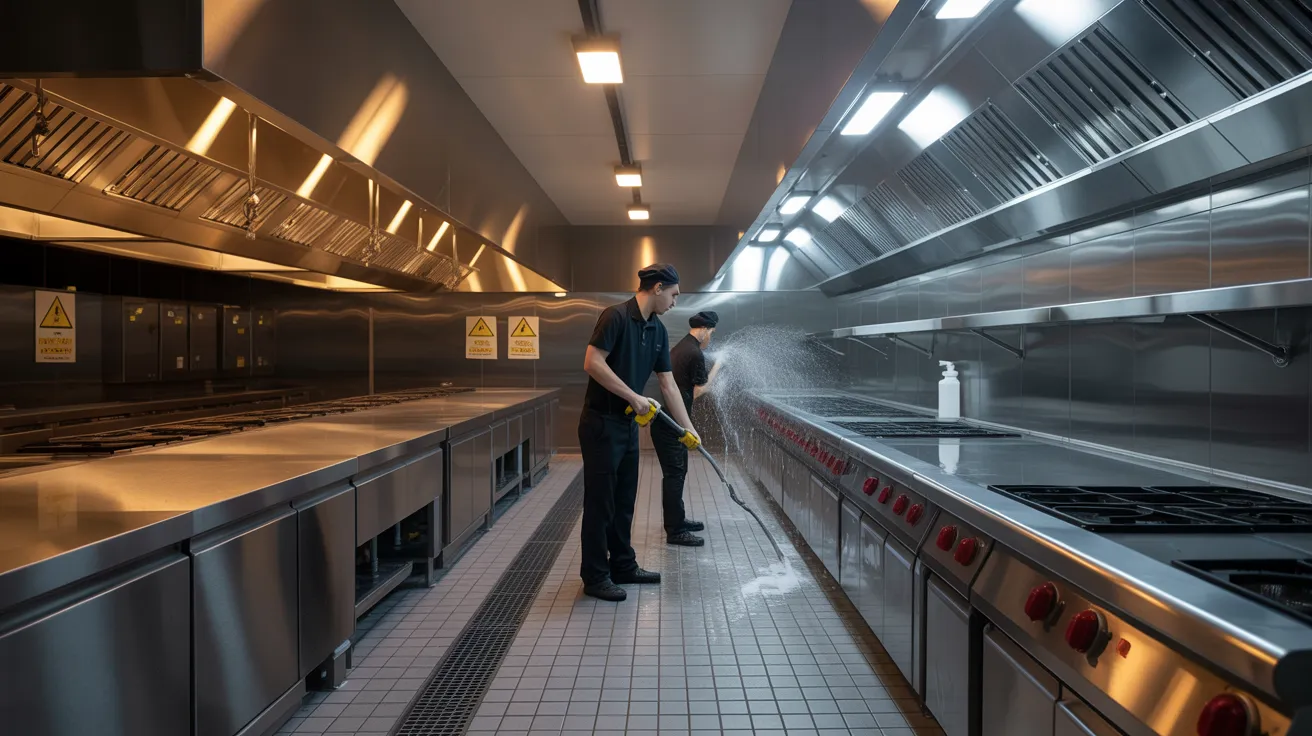
Expect Brampton cleaning experts to focus on kitchens, floors, and restrooms because each area carries distinct food safety, slip-and-fall, and sanitation risks. In industrial kitchens, you need degreasing on cook lines, equipment exteriors, drains, prep surfaces, and splash zones to minimize bacterial growth and pest activity.
Documented floor maintenance is also provided as part of the service.
Restroom cleaning involves disinfecting surfaces, fittings, separators, dispensers, and containers, replenishing amenities and managing odor. They also service restaurant moprooms, where chemical storage, sink hygiene, and drainage conditions can affect sanitation compliance and staff safety daily.
Why Food Safety Cleaning Matters in Brampton
To comply with regulatory mandates and pass inspections, Brampton establishments must follow appropriate cleaning protocols. You also reduce cross-contamination by cleaning and sanitizing food-contact surfaces, equipment, and high-touch areas correctly. Most importantly, you safeguard public health by lowering the risk of foodborne illness in your facility.
Health Code Compliance
Because Brampton food operations operate under rigorous sanitary regulations, food safety cleaning directly impacts your capability to fulfill health code requirements, safeguard customers, and prevent enforcement action. You must maintain hygienic food handling zones, documented cleaning schedules, proper chemical use, and traceable training practices that correspond to municipal and provincial inspection expectations.
Extensive hygiene logs enable you to demonstrate due diligence during compliance reviews and establish your methods remain standardized, replicable, and overseen. Proper hygiene practices further enables allergen control by reducing buildup on common tools and frequently touched surfaces.
Cross-Contamination Prevention
Meeting health code standards also depends on your capacity to stop cross-contamination during routine food preparation and sanitation. You must keep raw items away from prepared dishes, sanitize prep surfaces between tasks, and store chemicals away from food-contact items. Established guidelines minimize contamination chances and support consistent compliance during inspections.
You should establish allergen separation to prevent major allergens from touching shared surfaces, containers, or equipment. Use dedicated cutting boards, color-coded tools, and strict utensil labeling so employees avoid combining products throughout cooking or serving. Require handwashing after handling raw meat, seafood, eggs, or allergen-containing products. Replace wiping cloths regularly, and verify sanitizer strength with test strips. When you train staff to follow these controls each work period, you build a more hygienic, secure workplace that meets Brampton's food safety expectations consistently.
Public Health Defense
When food safety cleaning weaken, you don't only face inspection setbacks—you expand the chance of foodborne illness striking customers, staff, and the larger Brampton community. You also undermine your responsibility in protecting public health, especially in high-traffic food premises where contamination can spread quickly through surfaces, equipment, and touchpoints.
You need cleaning protocols that remove soils, sanitize correctly, and confirm effectiveness. That requires adhering to contact times, employing authorized sanitizers, documenting schedules, and educating employees to meet regulatory standards. These measures facilitate disease prevention by lowering microbial loads before they reach food or hands. In Brampton, rigorous cleaning shields at-risk groups, limits outbreak potential, and helps you demonstrate due diligence. When you clean to standard, you don't just meet regulations—you substantially decrease danger and support safer food service citywide.
Why Is Cleaning Essential for Food Safety Compliance?
Committing to thorough cleaning protocols reinforces food safety compliance by reducing contamination risks, managing pathogen expansion, and maintaining your facility's adherence to sanitation requirements under HACCP-based programs and public health regulations. You confirm that food-contact surfaces appear visibly clean and microbiologically controlled, enabling documented preventive controls and inspection readiness.
Cleaning efforts additionally upgrade allergen prevention by clearing residues that can provoke undeclared allergen exposure.
How Ought You Plan Commercial Cleaning Services?
Routines for cleaning are most successful when developed based on risk, production volume, and regulatory requirements instead of just a fixed calendar.
promotional occasions, catering functions, or public events ought to schedule cleaning both [[before and after for optimal event transition. Document schedules, confirm that work is completed, and revise routines when hazards, volumes, or regulations shift
What Should You Look For in Brampton Cleaning Experts?
Screen providers initially by their food-safe sanitation requirements—not budget alone. You need to verify that every company meets CFIA, public health, and HACCP-aligned expectations for your operation. Demand insurance verification, WHMIS compliance, training records, and management systems. Evaluate technician knowledge of contamination dangers, chemical safety, and documented sanitation practices.
Additionally, you need to evaluate operational reliability and accountability. Obtain references from food facilities in Brampton, then review service speed, corrective-action procedures, and communication standards. Verify the company conducts supplier reviews and can deliver compliance-ready records when inspectors or external parties need proof. Verify equipment is maintained, color-coded equipment are applied correctly, and site-specific hazards are identified. A capable service protects compliance, product quality, and your reputation.
What does a cleaning and sanitation plan consist of?
Develop a written plan that clarifies every sanitation responsibility, standard, and task before production begins. You should detail cleaning schedules, authorized chemicals, concentration levels, contact duration, implements, and validation techniques for each location, surface, and apparatus. Incorporate pre-operational inspections, corrective actions, and employee training requirements.
Your plan should also cover contamination prevention, garbage management, pest control procedures, and recorded timelines for restrooms, drains, floors, and food-contact areas. Detail how you'll keep raw and prepared foods apart, enable ingredient tracking, and ensure accurate allergen labeling through validated cleaning between product changes. You should designate accountability, maintain signed records, and review results against regulatory standards, HACCP controls, and customer requirements. When gaps appear, update procedures immediately and re-educate staff.
Commonly Asked Inquiries
Will cleaning services handle overnight shifts at Brampton facilities?
If you run regulated facilities, you'll also need records that support inspections and ensure compliance.
Do Brampton cleaning experts offer emergency spill response solutions?
Yes, you can expect many Brampton sanitation professionals to provide emergency spill response services. They manage hazardous materials, assess risks, isolate affected areas, and begin swift cleanup to reduce exposure and operational disruption. You should confirm their response times, professional credentials, safety procedures, and disposal procedures. If your facility must comply with industry standards, choose a provider that records events, maintains regulatory procedures, and enables compliance verification.
Do environmentally safe disinfectants work safely on food preparation areas?
In essence, natural disinfectants prove safe for food preparation areas provided you source disinfectants approved for food contact that adhere to regulatory requirements. Validate contact duration, dilution rates, and rinse protocols before use. Natural-based solutions minimize harsh chemical exposure, although you must have evidence of effectiveness against target microorganisms. For maintaining residue-free conditions, stick to precise manufacturer instructions and ensure the disinfecting agent meets food sanitation requirements.
Will cleaning schedules adapt to production fluctuations?
Yes, you can customize cleaning plans for production fluctuations. You should revise schedules, staffing, chemicals, and testing procedures to match production rhythms while upholding regulatory compliance. You'll minimize production interruptions by organizing sanitization around production shifts, high demand periods, and usage cycles. You should also update standard operating procedures, instruction programs, and environmental testing to capture seasonal hazards, novel allergens, or elevated soil levels. Periodic assessments ensure your plan current.
Do commercial cleaning providers coach your team in proper hygiene techniques?
Absolutely, commercial cleaners frequently provide employee education on sanitation best practices. Your staff receives training on proper chemical use, dwell times, contamination avoidance, equipment disassembly, and paperwork. They generally match instruction with HACCP, GMP, and CFIA or local public health standards. Many conduct health inspections to verify compliance, identify gaps, and reinforce corrective actions. This enables you to sustain uniform standards, clear audits, and lower contamination dangers routinely.
Final Thoughts
By collaborating with Brampton commercial cleaning and food safety experts, you aren't simply tidying—you keep your operation compliance-focused and your standards detailed article in compliance. From production areas to kitchen zones, every sanitized surface and maintained corner reduces pest risk and avoids expensive losses. By scheduling cleanings at appropriate intervals and following a documented cleaning plan, you protect your team, customers, and your standing. In a heavily controlled environment, hygienic conditions must be prioritized—they're essential to successful operations.